
Sustainability & Legislation Series - Chapter 8: US Sustainability Reporting in 2026: Fragmented Rules, Rising Stakes
By Jesper Risa, Data Analyst, Humans Not Robots.
It is mid-2026. The world is in a tumultuous, volatile state, and this includes the current standing of worldwide sustainability and reporting policy. The situation in the United States perfectly embodies this.
The country's sustainability and reporting regulations are far more limited than those of the EU and the UK, and changes are often made by amending existing acts rather than creating new ones.
The history of US sustainability reporting rules dates to 1992, when the Federal Trade Commission (FTC) issued its "Green Guides." These guides provide, among other things, guidance on how companies can avoid greenwashing. While they have been updated several times since, the last edition was released in 2012. A new edition was scheduled for 2024 but was not released, and another is not expected under the current administration.
The "Green Guides" are not mandatory, with the US only implementing its first mandatory sustainability reporting legislation in the 2020s.
The Enhancement and Standardisation of Climate-Related Disclosures for Investors (2024)
Issued in March 2024, the "Enhancement and Standardisation of Climate-Related Disclosures for Investors" was the first mandatory federal sustainability reporting legislation passed in the US. It mandates the inclusion of climate-related disclosures in end-of-year management reports for large firms and publicly traded companies.
The legislation was designed to give investors standardised, reliable data on sustainability operations within large companies, requiring them to share information on GHG emissions, physical climate risks, and the integration of these into wider risk-management strategies.
It was to be enforced starting in 2026, but after legal challenges, the SEC has as of March 2025 ended its defence of the rules, leaving it effectively unenforceable.
State Legislation
US sustainability legislation is often implemented at a state level rather than nationally. This is due to the country's relatively high degree of federalism, as well as significant polarisation on issues of sustainability. Sustainability reporting legislation is therefore concentrated in states dominated by the Democratic Party, where climate change deniers hold less political power.
California
In 2023, California became the first US state to pass sustainability reporting regulations, with Senate Bill 253 and 261. These mandate companies with revenue over $1 billion to disclose their greenhouse gas emissions, and companies with revenues over $500 million to disclose any climate-related risks, respectively. Both come into effect from 2026, with scope 3 reporting from 2027 for SB 253. SB 261 has, however, since been temporarily paused, and it is uncertain how long this will last.
New York
New York's Senate Bill 3456, also known as "The Climate Corporate Data Accountability Act", mandates the reporting of scope 1, 2, and 3 emissions for companies with revenues over US $1 billion. The act comes into force in three stages:
- 2027: Companies must publicly disclose their scope 1 and 2 emissions, verified at a limited assurance level.
- 2028: Companies must disclose scope 3 emissions. Assurance requirements specific to these emissions may be introduced.
- 2031: Verification standards tighten, with assurance for scopes 1 and 2 elevated to reasonable assurance. If previously established, scope 3 emissions verification will continue at a limited assurance level.
Meanwhile, Senate Bill 3697, or "Climate-Related Financial Risk Reporting", mandates climate risk disclosure for companies with over US $500 million in annual revenue. These reports come into force at the start of 2028, covering the calendar year 2027, and will be published biennially.
Further Attempts at Legislation
There have been multiple further attempts at implementing state-specific sustainability reporting legislation, but these failed due to a variety of reasons.
New Jersey
In 2025, New Jersey introduced Senate Bill 4117, the "Climate Corporate Data Accountability Act". This would have mandated the annual disclosure of scope 1, 2, and 3 emissions for companies with more than $1 billion in revenue but did not pass. It is currently considered dead.
Illinois
Also introduced in 2025 was Illinois' House Bill 3673 (the "Climate Corporate Accountability Act"). This would have been similar to New Jersey's Senate Bill, covering scope 1, 2, and 3 emissions for companies with revenues over $1 billion. It has not yet passed and is technically still alive but has not progressed since March 2025 and would need to be revived to move forward.
Colorado
Finally, Colorado's House Bill 25-1119 ("Require Disclosures of Climate Emissions") was also introduced in 2025 and, much like the two previous bills, would have covered scope 1, 2, and 3 emissions for companies with revenues over $1 billion. This bill has been indefinitely postponed and is now effectively defunct.
The State of US Sustainability in 2026
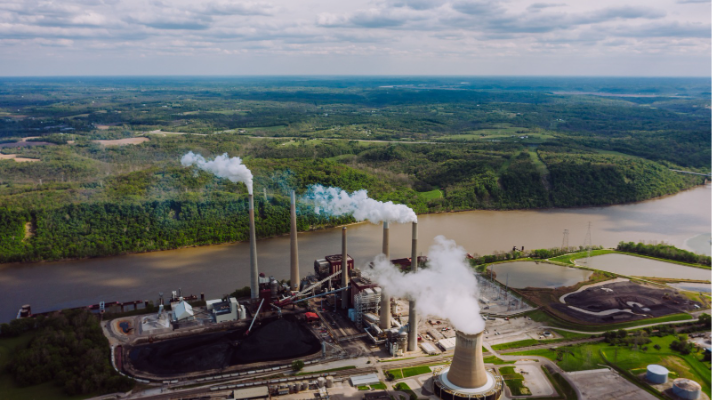
The US regulatory landscape is unique. Unlike many other countries, individual states hold significant power, leading to a patchwork of regulations that fall somewhere between the EU's unified approach and that of a unitary state. Climate science has also become a highly politicized topic in the country, with varying levels of acceptance across the political spectrum.
The political climate has a notable impact on sustainability initiatives. The current administration has expressed scepticism towards certain environmental policies, particularly those concerning renewable energy, while showing a preference for traditional fossil fuels.
One significant piece of anti-sustainability legislation is the "Ensuring Sound Guidance Act" of 2025. This act restricts investment advisers and fiduciaries from prioritising non-pecuniary ESG factors over financial returns, effectively forcing financial advisers to deprioritise ESG matters in their decision-making. Despite this, the international nature of the US economy means that many companies will still be subject to strict sustainability rules imposed by different regulatory regimes abroad.
Sustainability is only becoming more important. Regardless of deregulation in certain parts of the world, the material consequences of fossil fuel dependence and energy inefficiency are mounting for companies across the globe.
At Humans Not Robots, we specialise in helping organisations understand their energy usage, carbon footprint, and reporting obligations, wherever they operate. Contact us to find out how we can help you run a greener, leaner enterprise.

Related News

One Platform, Every Pathway: How a Unified Media Streaming Platform Combines Satellite, 5G and CDN

Sustainability and Legislation Series: Chapter 9 - What the Future Holds

Inside 5G-EMERGE's New Input to MPEG: A Blueprint for Hybrid Satellite Delivery
Ready To Start Saving?
Talk to HNR to reduce carbon emissions and costs from your digital infrastructure.
Book Demo